
Redesign netLex Website
Mobile and Desktop

My role
Visual Design, Wireframing, Prototyping (mobile and desktop), UX/UI Design, Design Leadership and Collaboration
Team members
Ramon Guerra, Tatiana Sousa, Luiz Anacleto, Giuliana Rezende)
Tools
Figma, Illustrator
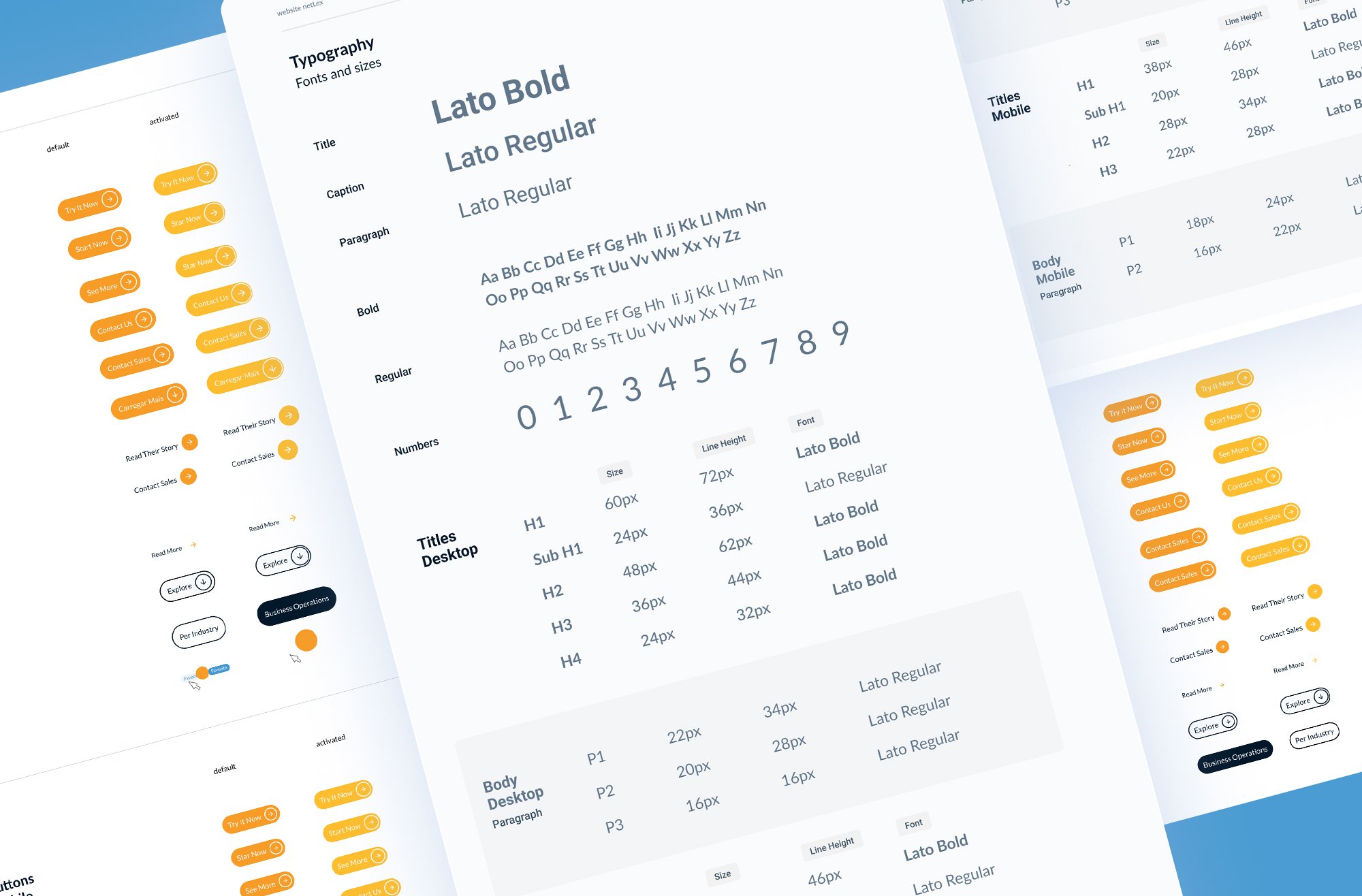
As the lead designer, I owned the end-to-end UX/UI strategy, transforming the business vision into a high-converting digital product. I led the design process from ideation to execution, delivering wireframes and interactive prototypes, and developing a design system that optimized engagement across different devices.
Challenge
As a market-leading Contract Lifecycle Management (CLM) platform, netLex set out to elevate its digital ecosystem and scale inbound lead generation. While the legacy website had successfully fulfilled its core role for years, it no longer reflected the company's enterprise growth or evolving market positioning.
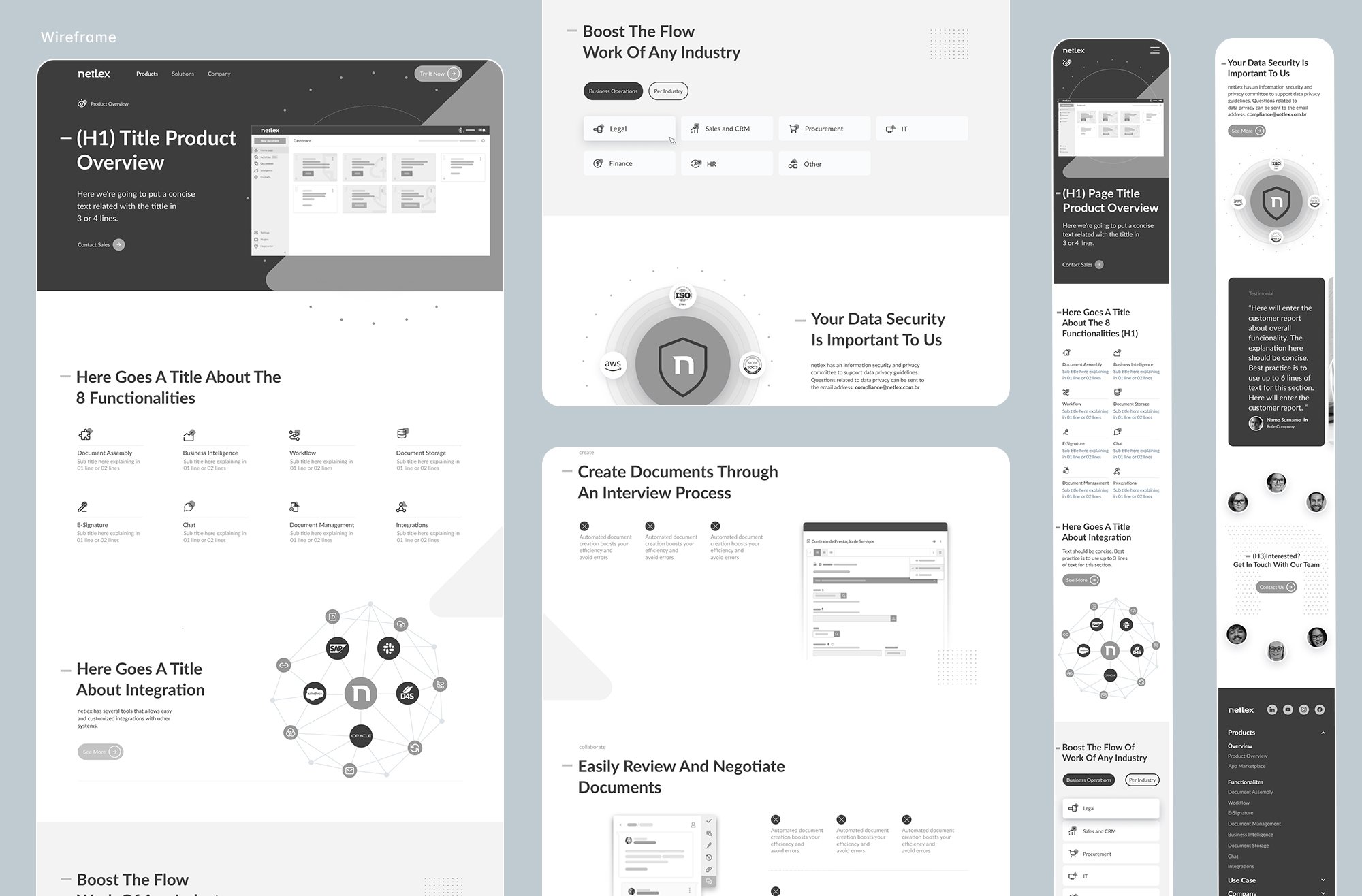
General Guidelines
Fast and responsive.
Compelling and attractive.
Scale information architecture with structural multi-language support (English-first approach).
Product-led growth (PLG) oriented.
Modernize the visual identity to establish authority and trust among Fortune 500 target accounts.
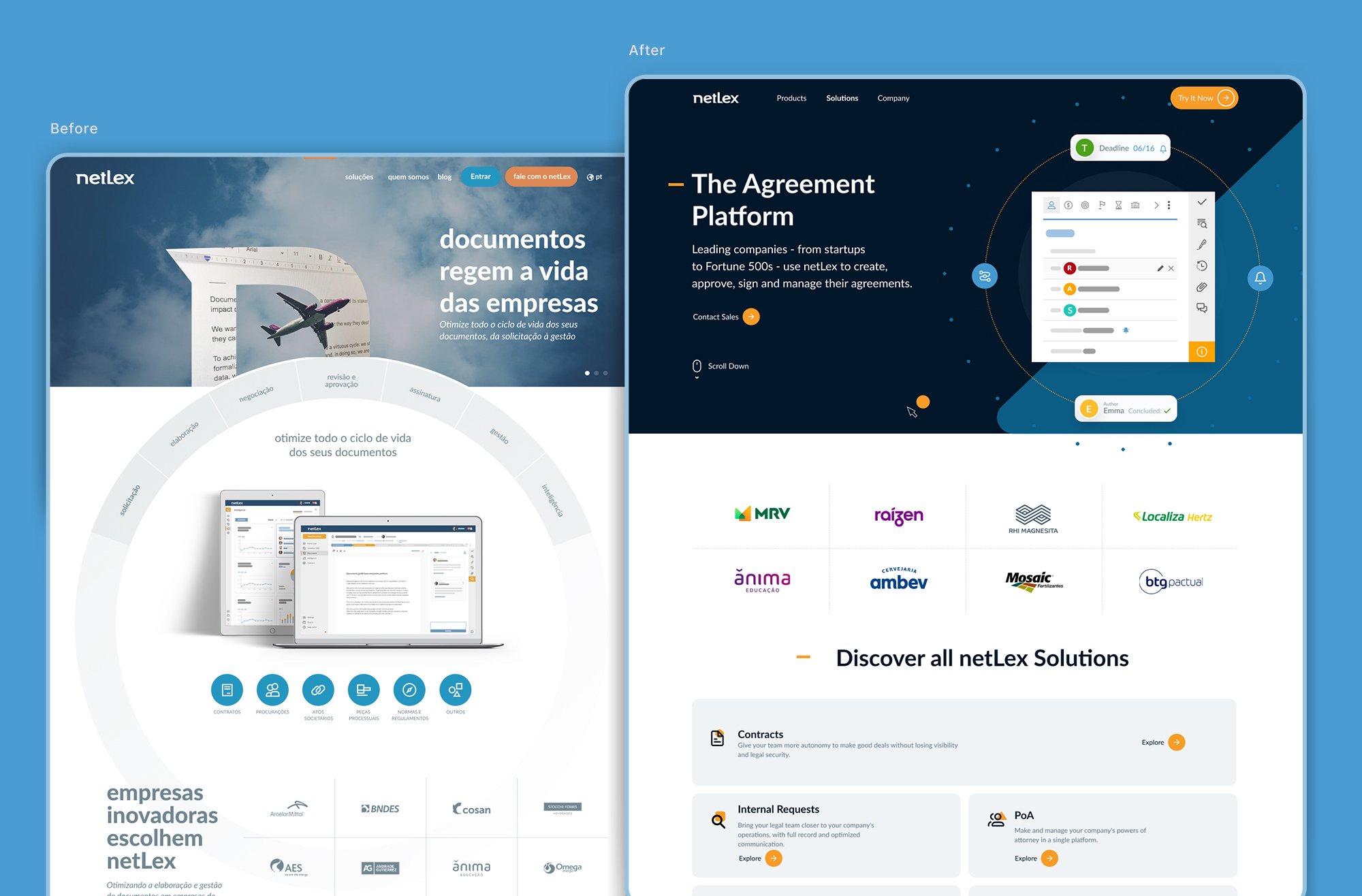
Desktop
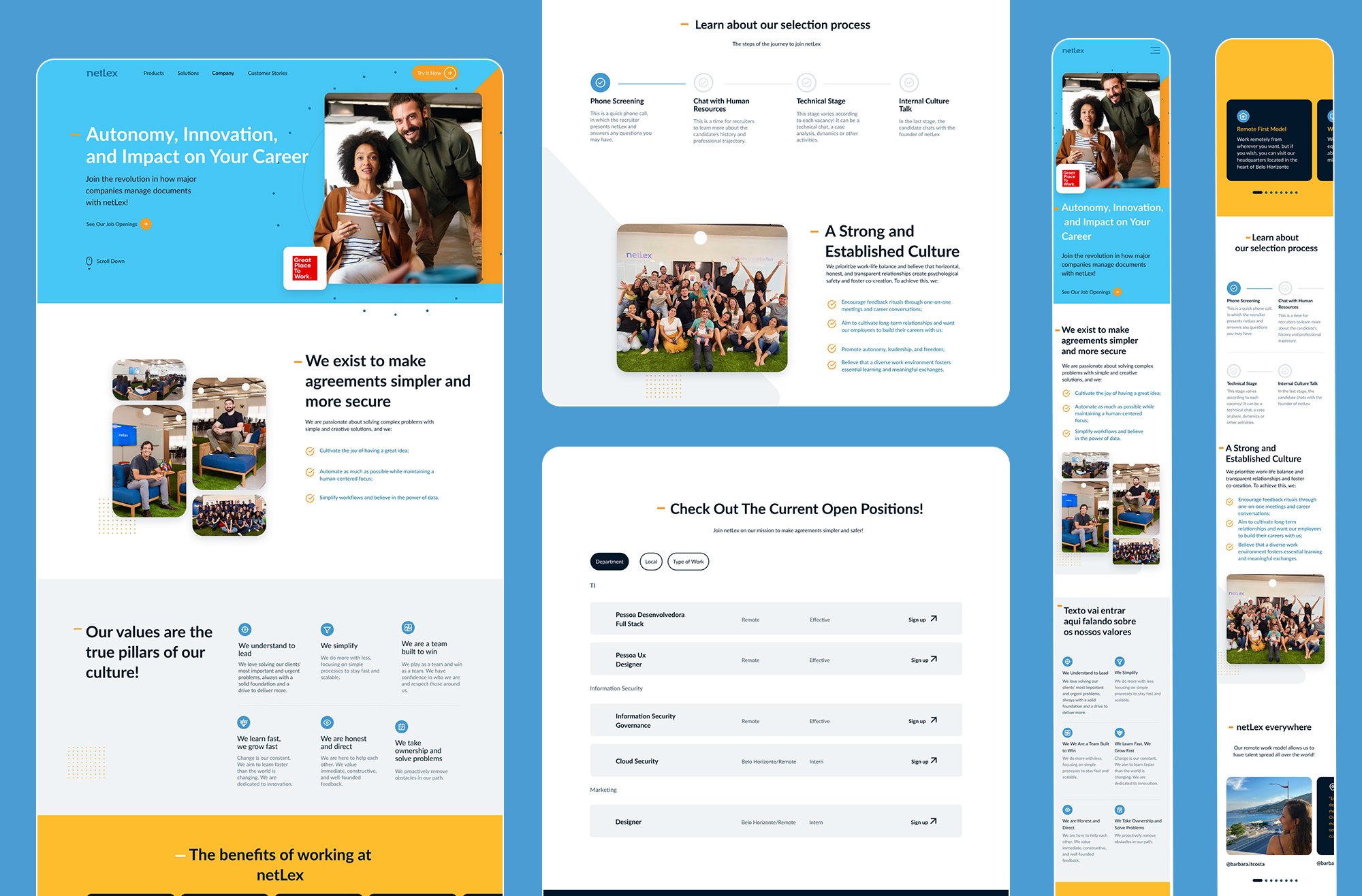
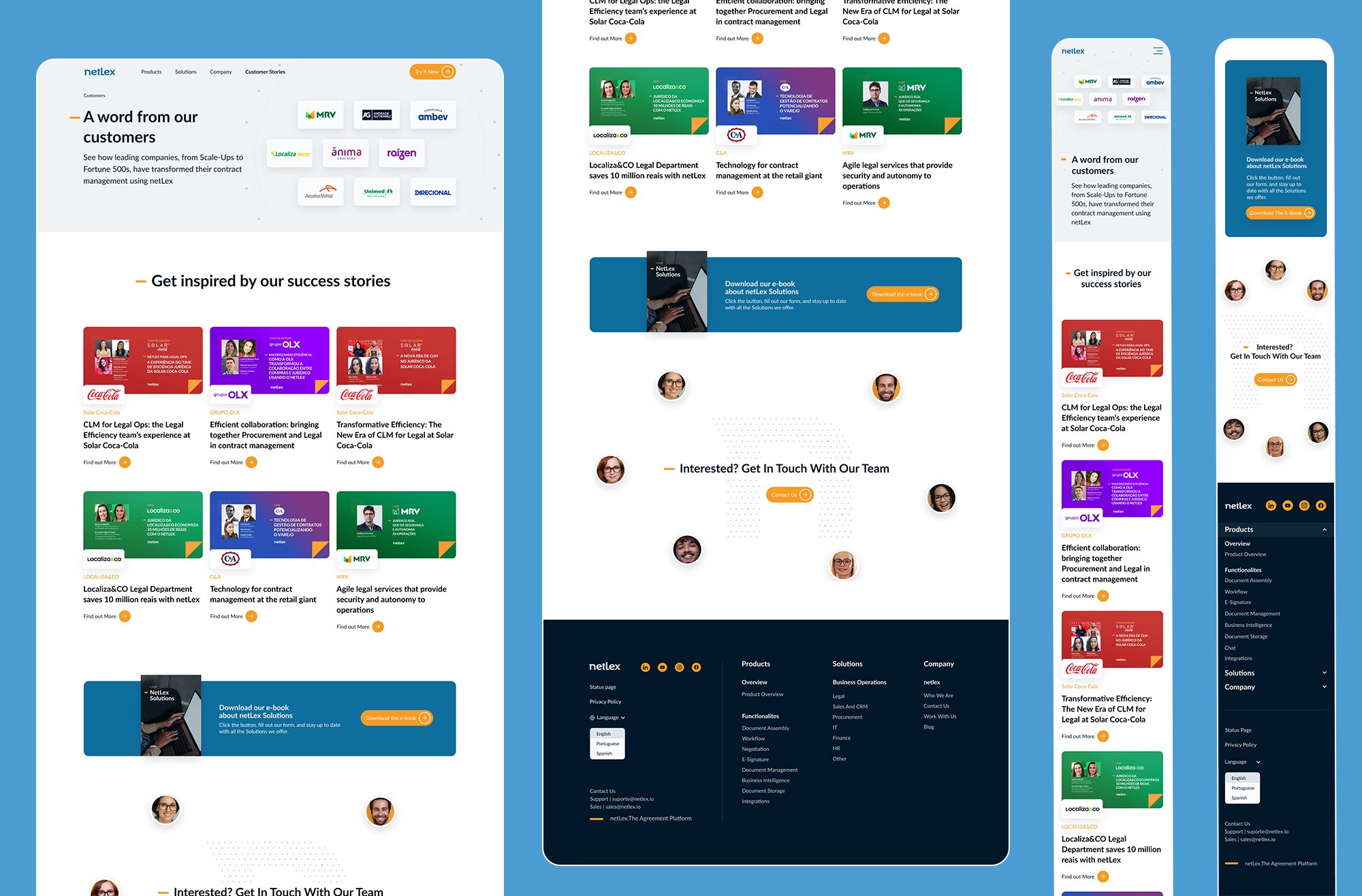
The platform redesign introduced key architectural pillars, including a modular solutions catalog, a social proof repository with enterprise case studies, and a scalable employer brand hub. High-intent conversion points and optimized lead capture forms were systematically deployed, directly accelerating qualified inbound pipeline generation within the enterprise CLM market.
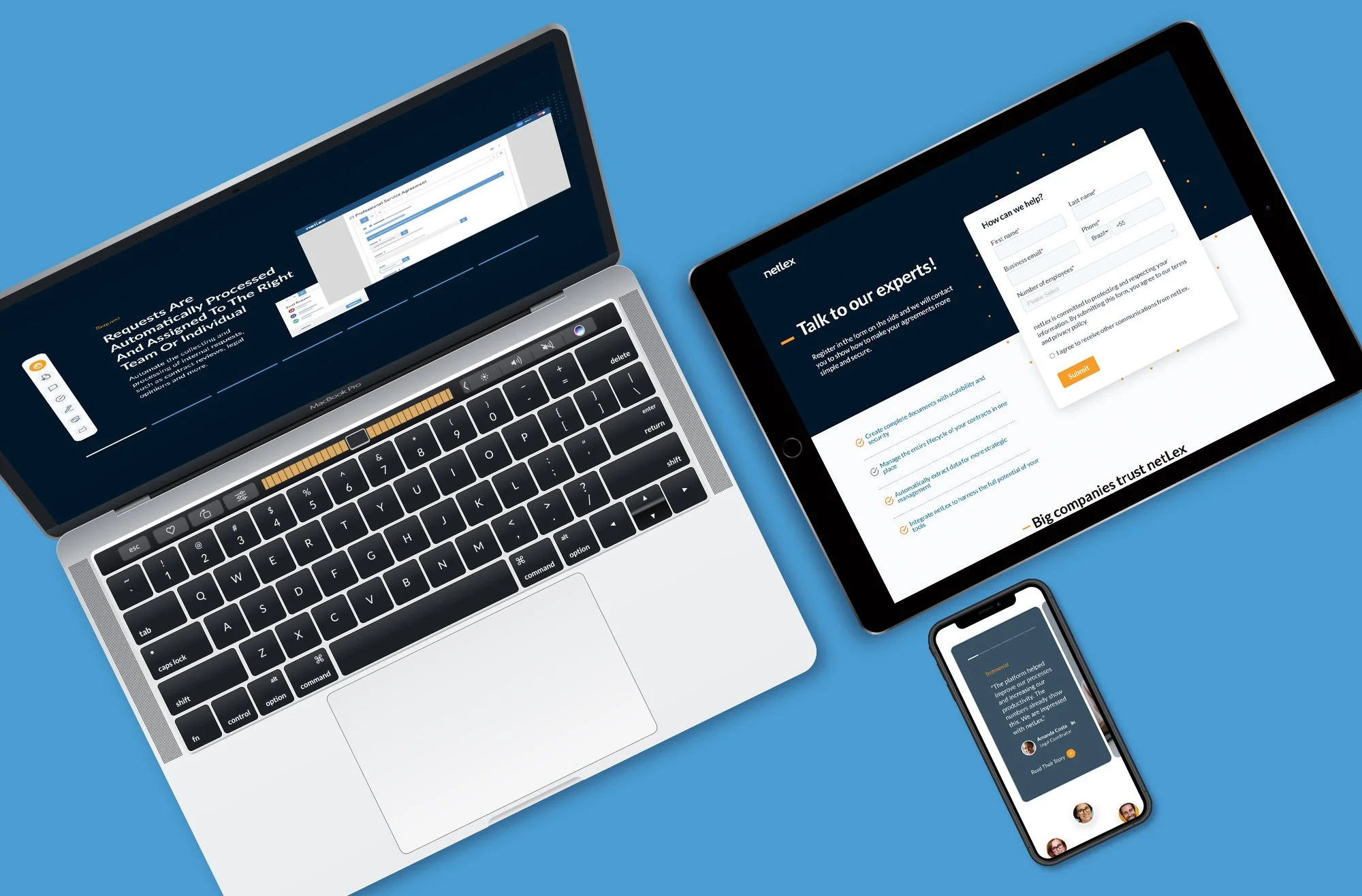
Mobile
By adopting a rigorous mobile-first architecture, UI components and navigation paths were meticulously prototyped and refined to guarantee seamless usability across smaller viewports.
Learnings
End-to-End Design Ownership – Leading the entire process, from architecture to high-fidelity prototypes, strengthened my ability to manage complex projects independently.
Mobile-First Thinking – Prioritizing mobile usability ensured a seamless experience across all devices, reinforcing the importance of adaptability in design.
Design System Governance – Validated how architectural brand scalability directly accelerates front-end engineering delivery speeds and preserves visual consistency.
Deep Dive into Accessibility – While redesigning the blog, I had to study and apply WCAG guidelines to ensure an inclusive experience for all users. This process reinforced the importance of making digital content accessible to people with disabilities.
Real impact
Qualitative and Quantitative Results
Inbound Readiness
The design created a responsive navigation for both desktop and mobile. This gave marketing and growth teams working conversion paths, built for organic traffic and future sales pipeline tracking.
Information Architecture Efficiency
Internal stakeholders and client-facing teams reported a drastic reduction in cognitive friction regarding how complex product features and modular solutions were discovered and understood.
Traffic numbers (first 12 months after launch)
92.4% new visitors, against 7.6% returning visitors. This shows the site was reaching new audiences, matching the original goal to scale inbound lead generation